What is the Difference Between Floodlight and Spotlight?

Time:2026-06-12 Author:Oliver
0%

When exploring the realm of lighting solutions, a key question arises: what is the difference between floodlight and spotlight? Each serves unique purposes in various settings, yet their applications may often be overlooked. According to a recent industry report by the Illuminating Engineering Society, about 50% of commercial spaces utilize improper lighting, leading to efficiency losses.

Lighting expert John Smith emphasizes, “Understanding the differences in lighting types can significantly enhance both functionality and aesthetic.” Floodlights provide widespread illumination, making them ideal for outdoor spaces and security applications. In contrast, spotlights generate focused beams perfect for highlighting specific areas or objects, often used in art galleries and theaters.

As we delve deeper into this topic, the stark contrasts between floodlights and spotlights become apparent. Misalignment in lighting choices can affect mood, safety, and even productivity. It’s vital to reflect on how these distinctions apply to real-world scenarios. Understanding these details ensures better decision-making when selecting lighting solutions, ultimately impacting the overall success of a project.
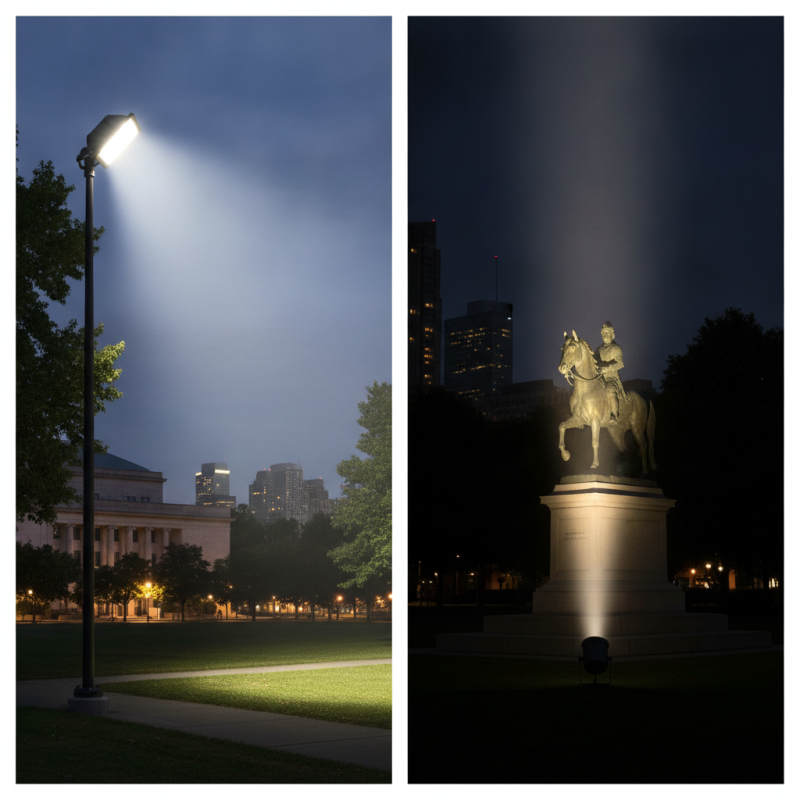
What is the Difference Between Floodlight and Spotlight?

Understanding the Basic Concepts of Floodlights and Spotlights

Floodlights and spotlights serve unique purposes in lighting applications. Floodlights provide broad illumination over a wide area. They are perfect for outdoor spaces, such as parks and stadiums. According to the Illuminating Engineering Society, floodlights can emit 2,000 to 30,000 lumens. This range makes them ideal for security and large gatherings. Their design allows for light dispersion that covers extensive areas with minimal shadows.

In contrast, spotlights focus on specific areas, usually producing a narrow beam. This focused light is beneficial in applications like theater performances or art displays. Data from the National Association of Broadcasters indicates that spotlights can yield between 1,000 to 5,000 lumens. The concentrated light enhances visibility on specific subjects, making them stand out distinctly. Yet, spotlights may miss illuminating surrounding areas, leading to uneven lighting.

Understanding these differences helps users select appropriate lighting options. Assessing the intended application can guide better decisions. Users often struggle between choosing one over the other. Floodlights excel in general safety, while spotlights shine in attention to detail. Balancing these factors can lead to improved effectiveness in lighting design.

Key Features of Floodlights: Coverage and Brightness

Floodlights and spotlights serve different purposes in outdoor lighting design. Floodlights are known for their broad coverage and high brightness. They provide a wide beam angle, typically between 90 to 120 degrees. This feature allows them to illuminate large areas effectively. According to the Illuminating Engineering Society, floodlights can produce brightness levels exceeding 10,000 lumens, making them ideal for sports fields, parking lots, and outdoor events.


The brightness of floodlights is essential for safety and visibility. For instance, effective lighting in commercial spaces has been linked to a 20% reduction in accidents, as reported by the National Safety Council. However, while floodlights are great for area coverage, their light can often wash out details. Poorly designed floodlight placements may lead to over-illumination in certain spots, creating unwanted glare and shadows in others.


In contrast, spotlights focus on a narrower area with a beam angle typically between 15 to 45 degrees. They provide concentrated light that enhances specific features, such as architectural details or artwork. The energy consumption of lighting fixtures, particularly LED models, has improved over time. Still, users should remember that too much focus can lead to under-illumination in surrounding areas. Evaluating the balance between coverage and focus is vital for optimal outdoor lighting scenarios.

Key Features of Spotlights: Precision and Focus

Spotlights are known for their precision and focus. They create a narrow beam of light, capturing attention to specific areas. This characteristic is vital in various settings, from theaters to art galleries. The ability to highlight details enhances the visual experience. When spotlighting an artwork, one can appreciate textures and colors that might be overlooked in broader lighting.

The design of spotlights allows for adjustable angles. This flexibility enables users to direct light precisely where it's needed. However, this precision can sometimes feel limiting. A room may appear dull if only one focal point is illuminated. Balance is crucial; without it, the ambiance may suffer. Spotlights excel at establishing a mood, but they require careful placement to avoid harsh contrast in a space.

Understanding the characteristics and limitations of spotlights can lead to better decisions in lighting design. They offer clarity but may not provide the warmth of broader lights. Evaluating the environment helps in achieving the desired effect. Quality lighting is an art and a science, demanding attention to detail and creativity. Embracing imperfections in spotlight usage can lead to unique lighting solutions that enhance a space's aesthetic.

Common Uses of Floodlights in Outdoor Lighting

Floodlights are commonly used in outdoor lighting for various purposes. They provide broad and intense illumination, making them ideal for large areas. Sports fields, parking lots, and backyards often use floodlights to ensure safety and visibility during nighttime. Their wide beam angle covers extensive spaces, preventing dark spots where intruders may lurk.

When installing floodlights, consider their placement carefully. Angling them correctly maximizes their effectiveness. Avoid positioning them too high, as this can reduce their light spread. Also, aim for a balance between brightness and glare. Excessive brightness can be uncomfortable for people nearby.

Tips: Use motion sensors with floodlights. They save energy and enhance security. Consider integrating smart technology for remote control. Brightness levels can often be adjusted based on specific needs. Always remember to check local regulations regarding outdoor lighting before installation. Taking these steps can improve your outdoor lighting experience significantly.

Common Uses of Spotlights in Theatrical and Photography Applications

Spotlights play a crucial role in theatrical and photography applications. They provide focused illumination, highlighting specific subjects while creating a dramatic effect. In theater, spotlights help to draw attention to actors and key scenes. The precise beam of light enhances performance, adding depth and emotion. This targeted lighting creates a connection between the audience and performers.

In photography, spotlights serve to emphasize the subject against a softer background. Photographers use them to create striking contrasts. A well-placed spotlight can transform a simple portrait into a work of art. It adds dimension and texture. Yet, using spotlights effectively can be challenging. Improper placement can lead to harsh shadows or overexposure, detracting from the image’s quality. The key is experimentation and understanding how light interacts with the subject.

Understanding the nuances in spotlight usage is essential. It requires practice and a keen eye for detail. Feeling the lights, adjusting angles, and observing the changes can lead to stunning results. However, this exploration may not always yield perfect outcomes. Reflection on what works and what doesn't is an integral part of the learning process.

What is the Difference Between Floodlight and Spotlight? - Common Uses of Spotlights in Theatrical and Photography Applications

Light Type Beam Angle Common Uses Best For
Floodlight Wide (greater than 60 degrees) Outdoor lighting, stage washes, general illumination Lighting large areas, backgrounds
Spotlight Narrow (less than 45 degrees) Theater performances, photography portraits, emphasizing artwork Highlighting subjects, creating dramatic effects

FAQS

: What are the main differences between floodlights and spotlights?

: Floodlights provide broad illumination, while spotlights focus on specific areas with a narrow beam.

How bright are floodlights compared to spotlights?

Floodlights can emit 2,000 to 30,000 lumens. Spotlights generally yield between 1,000 to 5,000 lumens.

What are common applications for floodlights?

Floodlights are ideal for outdoor spaces like parks, stadiums, and security lighting. They cover large areas effectively.

Why might someone choose a spotlight over a floodlight?

Spotlights are useful for highlighting details in theater performances or art displays where focused light is needed.

Can floodlights create issues in lighting design?

Yes, they can cause over-illumination and glare, leading to shadows and poor detail visibility in some spots.

What challenges do photographers face when using spotlights?

Improper placement can lead to harsh shadows or overexposure, reducing the quality of images.

How can users improve their spotlight techniques?

Experimentation with angles and placements is key. Reflection on outcomes helps refine lighting skills.

Are floodlights more energy-efficient than spotlights?

Energy consumption varies by fixture. LED models have improved efficiency for both types.

What is a potential downside of using spotlights?

Too much focus can lead to under-illumination of surrounding areas, which may affect overall visibility.

What is crucial for optimal outdoor lighting design?

Balancing coverage and focus is vital for effective lighting in various scenarios.

Conclusion

The article "What is the Difference Between Floodlight and Spotlight?" explores the fundamental distinctions between these two types of lighting fixtures. Floodlights are characterized by their broad coverage and high brightness, making them ideal for illuminating large outdoor areas such as sports fields and parking lots. In contrast, spotlights are designed for precision and focus, allowing for targeted lighting in applications like theatrical performances and photography, where specific subjects need to be highlighted.

Additionally, the article delves into the common uses of floodlights in outdoor environments, emphasizing their effectiveness in security and safety lighting. It also discusses the role of spotlights in creative fields, where their ability to direct light precisely adds depth and drama to visual presentations. Ultimately, understanding what is the difference between floodlight and spotlight is essential for choosing the right lighting for various applications.

Oliver

Oliver

Oliver is a seasoned marketing professional with a wealth of expertise in driving brand awareness and engagement. With a deep understanding of our company's product offerings, he consistently delivers high-quality content that enriches our professional blog. His insights not only shed light on......