2026 Best Stage Lighting How to Fix Shadows?

Time:2026-09-20 Author:Mason
0%

Stage lighting should reveal performers, not hide their faces behind hard-edged shadows. In 2026, better LED fixtures, wireless control, and precise beam shaping make shadow control more achievable. However, equipment alone cannot solve poor placement. A bright spotlight can still create dark eye sockets, a black strip across the floor, or distracting silhouettes on the backdrop.

This guide explains how to fix shadows caused by bad stage lighting through practical, repeatable methods. It covers fixture height, front-light angles, cross-lighting, beam overlap, diffusion, and careful intensity balancing. A profile fixture may need a different solution from a Fresnel or an LED panel. Check the beam on a real performer, not only on an empty stage. Skin tone, costume texture, haze, and set pieces can change the result.

Small adjustments matter.

During live productions, I have sometimes raised a fixture when lowering it would have worked better. That mistake is worth remembering. Shadow problems often come from several small choices, including narrow beams, uneven dimming, and light aimed directly into the floor. Reliable corrections begin with observation and measurement. Use the fixture’s photometric data, inspect the stage from the audience view, and test every change at performance brightness. This approach supports clearer faces, smoother scenery, and safer visual decisions without over-lighting the stage. Good lighting is not simply brighter. It is controlled, intentional, and responsive to the people using the space.
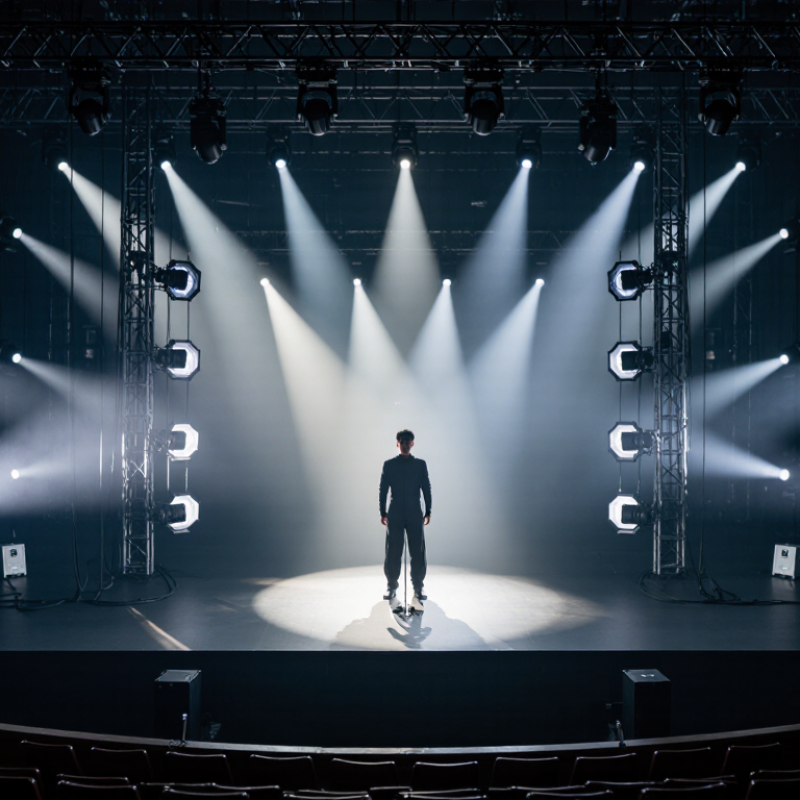
2026 Best Stage Lighting How to Fix Shadows?

Identify the Cause and Type of Shadow on the Stage

2026 Best Stage Lighting: How to Fix Shadows?

Identify the cause before changing fixtures. In my stage checks, shadows usually fall into four types: hard-edge cast shadows, double shadows, self-shadows, and unwanted scenic shadows. A hard shadow often comes from a small, distant source. A double shadow usually means two beams arrive from different angles. Self-shadowing appears when a performer’s face turns away from the key light. Scenic shadows can reveal gaps, rails, or uneven surfaces.

Measure the problem from the audience view. Walk across the stage and watch the nose, chin, and floor line. Check the beam angle, source distance, intensity balance, and fixture alignment. A wider source can soften edges, while cross-lighting can reduce facial darkness. Avoid simply adding brightness. The U.S. Department of Energy’s 2023 Solid-State Lighting R&D Opportunities report lists laboratory LED efficacy above 200 lumens per watt, but real fixtures lose output through optics, heat, and distance. More output does not guarantee cleaner light. I still misread shadows when focusing only on the performer. That is a useful mistake.

Tips: Photograph the stage from three audience positions. Mark each shadow’s direction with tape. If two shadows appear, test one source at a time. Raise or lower the light in small steps, then reassess the eyes and floor. Keep notes, even when the fix seems obvious. Small reflections from a glossy floor can confuse the diagnosis. Test again without haze, because haze can make a beam look stronger than its actual facial coverage.

Adjust Light Position, Height, and Beam Angle

2026 Best Stage Lighting: How to Fix Shadows?

Shadow control begins with light position, height, and beam angle. The Illuminating Engineering Society’s Lighting Handbook explains that illuminance follows the inverse-square law. Doubling a fixture’s distance can reduce illuminance to roughly one quarter. That is why a small height change may create a surprisingly dark face. In practice, place front fixtures about 30 to 45 degrees above the performer’s eye line. Move them slightly off-axis, then add a softer cross-light from the opposite side. This reduces nose and eye shadows without flattening facial features.

Beam angle matters just as much. A narrow beam creates stronger contrast and sharper shadows. A wider beam spreads the same output across more area, so faces may look dimmer. The International Commission on Illumination’s CIE 150:2017 guidance also highlights glare and unwanted light as visibility concerns. Keep beams controlled with shutters or carefully aimed accessories. I usually raise a fixture only after checking its shadow edge on the floor. Too much height can darken eye sockets. I still make mistakes here. A five-degree tilt can change the actor’s expression. Test at performance distance, not from the lighting position. Use a tape mark, record the angle, and inspect movement across the stage. The best correction is often a small repositioning, not more intensity.

Balance Front, Side, Back, and Top Lighting

2026 Best Stage Lighting: How to Fix Shadows?

Balanced lighting begins with four directions: front, side, back, and top. Front light reveals facial detail, but excessive intensity flattens expressions. Side light restores shape along the cheekbones and shoulders. Back light separates performers from dark scenery. Top light adds depth, yet it can create deep eye sockets. I usually begin near 500 lux at face level, then adjust by camera and audience position. This is a working reference, not a universal rule.

The U.S. Department of Energy’s 2023 Solid-State Lighting R&D report records laboratory LED efficacies above 200 lumens per watt. Real stage fixtures deliver less, because optics, distance, color, and heat reduce output. CIE 150:2017 also stresses glare control through viewing position and adaptation. Therefore, brightness alone cannot repair shadows. Measure faces from the audience’s sightline. Check them at standing and seated heights. A 30–45-degree front angle often gives cleaner facial modeling than a steep overhead angle. Keep side light slightly lower than front light, then use backlight only until the performer’s outline appears.

I still miss small shadows sometimes. That matters. A dark eye socket may come from top light, not weak front light. A bright halo may come from excessive backlight. Walk the stage with a handheld meter. Record each angle, color temperature, and dimmer level. Review the scene through a camera, too. Human vision forgives unevenness; cameras often expose it. Balance should be tested, not guessed.

Use Diffusion, Barn Doors, and Proper Light Intensity

2026 Best Stage Lighting: How to Fix Shadows?

Use diffusion to soften harsh beams without erasing facial detail. A thin diffuser placed near the fixture creates broader, gentler light. Keep it away from hot surfaces and inspect its heat rating. In live productions, I have found that diffusion works best when paired with a second, weaker angle. One source alone often produces a flat face and a dark eye socket. That mistake is easy to repeat.

Barn doors provide faster control than moving the entire fixture. Shape the beam around curtains, scenic edges, and microphones. Leave a small clearance, because tight metal cuts can create unwanted edge shadows. The IES Lighting Handbook explains the inverse-square law: doubling the light’s distance reduces illuminance to one-quarter. Measure from the stage, not from the floor. This small detail changes exposure quickly.

Light intensity must support the diffusion loss. Add output gradually, then check skin tone, costume texture, and background spill. The U.S. Department of Energy’s 2023 Solid-State Lighting R&D Opportunities report identifies optical control and uniformity as continuing priorities, while its projections discuss efficacy near 200 lumens per watt for future systems. More output is not automatically better. I still sometimes chase brightness when repositioning would solve the shadow. A handheld light meter helps, but your eyes remain essential. Test from the audience seats.

Test the Stage and Fine-Tune Shadows During Rehearsal

During rehearsal, stage lighting should be judged from the audience, not only from the control desk. Walk through the front row, center aisle, and back seats. Watch faces during movement, especially when performers cross near set pieces. A strong side light may shape the body beautifully, yet leave deep shadows under the eyes. Ask the performer where visibility changes.

Use a simple rehearsal check. Mark three positions on the floor with tape. Have the performer pause at each mark, turn left, and turn right. Look for shadows on the face, floor, and backdrop. Record the angle, intensity, and color of each fixture. Small adjustments matter. Raise a light slightly if the brow looks heavy. Move it sideways when the nose shadow becomes too sharp. Reduce intensity before adding more equipment.

Do not trust one successful test. The stage may look balanced during a quiet scene, then fail when an actor removes a hat or carries a tall prop. I still miss these changes sometimes. That mistake reminds me to test costumes, blocking, and scenic pieces together. Keep a rehearsal log with photos and short notes. Recheck after every major movement change. Soft fill can help, but too much fill flattens the performer and weakens depth. Fine-tuning takes patience, and the best result often comes from a smaller adjustment than expected.

2026 Best Stage Lighting: How to Fix Shadows?

Test the stage and fine-tune shadows during rehearsal.

The chart compares the observed shadow index across six stage zones before and after lighting adjustments. The index is rated from 0 to 10, where 0 indicates no visible shadow interference and 10 indicates severe shadow interference. Lower values after adjustment show improved stage coverage.

FAQS

What are the main types of stage shadows?

Common types include hard-edge shadows, double shadows, self-shadows, and unwanted scenic shadows. Each type suggests a different cause.

Why does a hard-edged shadow appear?

A small, distant light source often creates sharp edges. A wider source can make the shadow softer.

What causes double shadows on a performer?

Two light beams may arrive from different angles. Test each source separately to identify the responsible fixture.

How can facial shadows be reduced?

Use cross-lighting or raise the light slightly. Adjust intensity before adding another fixture.

Where should shadows be judged?

Check from the front row, center aisle, and back seats. The control desk cannot show every audience-view problem.

What rehearsal test helps reveal shadow problems?

Mark three floor positions with tape. Have the performer pause, turn left, and turn right at each mark.

How can scenic shadows be diagnosed?

Inspect gaps, rails, uneven surfaces, and tall props. Photograph the stage from three audience positions.

Can brighter lighting solve most shadow problems?

Not always. More brightness may leave sharp shadows or flatten facial depth.

Why should haze be removed during testing?

Haze can make a beam look stronger than its facial coverage. Test once without haze.

What should be recorded during shadow adjustments?

Note each fixture’s angle, intensity, and color. Keep short rehearsal notes, even when the fix seems obvious.

How can costumes and props affect shadows?

Hats, tall props, and movement can change facial and scenic shadows. Recheck after major blocking changes.

What common mistake should lighting teams avoid?

Do not focus only on the performer. I still miss floor reflections and set-piece shadows sometimes. That mistake matters.

Conclusion

Fixing stage shadows begins with identifying their source and shape. Determine whether the shadow is caused by an incorrectly placed fixture, an unsuitable height, an overly narrow beam, or an imbalance between lighting directions. To learn how to fix shadows caused by bad stage lighting, adjust the position, elevation, and beam angle of each light while observing how the changes affect performers and set pieces. Avoid relying on a single front light, as it can create harsh facial shadows and flatten the stage.

A balanced combination of front, side, back, and top lighting can provide depth while reducing unwanted dark areas. Diffusion can soften hard edges, while barn doors help control spill and prevent light from reaching unintended surfaces. Adjust intensity gradually so that no fixture overpowers the others. Finally, test the entire stage during rehearsal from the audience’s viewpoint, checking movement, transitions, and different performance positions. Fine-tuning throughout rehearsal ensures that shadows remain controlled, natural, and visually consistent.

Mason

Mason

Mason is a seasoned marketing professional with a deep expertise in the company's offerings and a passion for driving brand awareness. With a strong background in digital marketing strategies, he has an innate ability to connect with diverse audiences and effectively communicate product benefits.......